Young journalists equipped to tackle misinformation at Yaounde Media Talk
 1 / 2
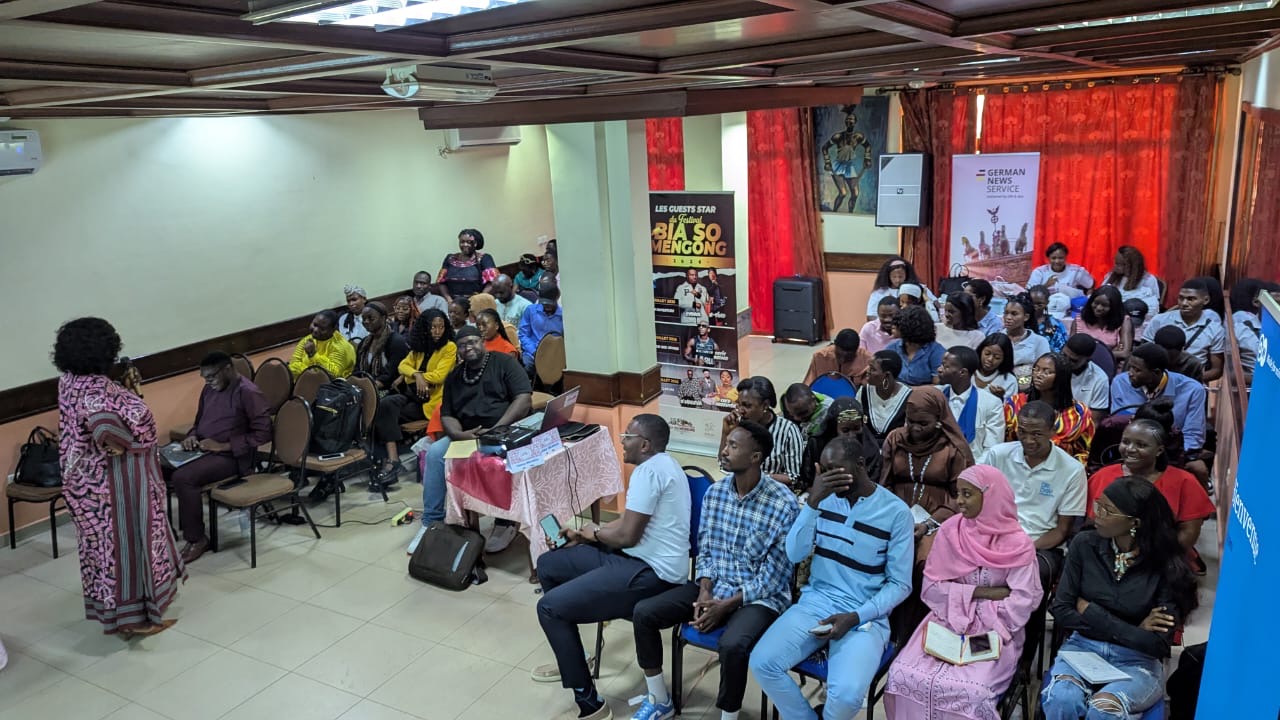
1 / 2The challenge of producing credible information in an era dominated by digital platforms took center stage in Yaounde on Friday March 6, 2026, as journalism students and media professionals gathered for “Le Talk des Futurs Journalistes.” The event, held at the Mansel Hotel, brought together aspiring journalists and communication experts to discuss how the profession can respond to misinformation spreading across blogs, social media, and other online platforms.
The conference, supported by international media and training organisations, created a forum for young journalists to explore the tools and professional practices required to maintain accuracy and credibility in the digital media landscape. With the growing influence of bloggers, influencers and internet users in shaping public opinion, participants were encouraged to reflect on the responsibility of journalists to verify information before publication.
Discussions highlighted the importance of effective storytelling in modern journalism. Participants heard how well-structured narratives can help journalists present verified information in ways that capture public attention while maintaining accuracy. In a media environment where false information often spreads rapidly online, compelling storytelling combined with solid investigative work was presented as a powerful way to counter misleading narratives.
Another major focus of the event was media and information literacy, particularly among young audiences who consume large amounts of news through digital platforms. Speakers stressed that developing critical thinking skills and the ability to assess the credibility of sources is essential in preventing the spread of misinformation. Educating young people on responsible information sharing was described as a key step in strengthening the overall information ecosystem.
The role of data-driven reporting also featured prominently in the discussions. Participants were introduced to the importance of using data analysis and verification tools to confirm information before publication. Evidence-based reporting, they were told, not only strengthens journalistic credibility but also enables reporters to challenge false claims circulating in the public sphere.
Attention was also drawn to the growing problem of visual misinformation, including manipulated images and misleading graphics that circulate widely online. Journalists were encouraged to develop technical skills that allow them to verify visual content and identify altered images before incorporating them into news reports.
Beyond technical skills, the conference also examined the ethical and professional challenges journalists face in the digital era. Issues such as online harassment, misinformation campaigns and the pressure to publish quickly were identified as some of the realities confronting media practitioners today. Participants were reminded that maintaining professional ethics and responsible reporting practices remains essential for preserving public trust in journalism.
For many of the students who attended, the gathering offered valuable insight into the demands of modern reporting. As the digital media landscape continues to evolve, the discussions underscored the need for future journalists to combine technological skills, ethical standards and critical thinking in order to deliver credible information to the public.
Wobyeb Carl Asmac J3